Founded 2026 / Tucson, AZ · USA / 3 principals · researcher-led

A research-grade prototyping shop for defense problems.

SigVis Solutions was founded by defense-research engineers who were tired of watching defense-research timelines lose to the slow handoffs between labs, primes, and program offices. We compress that loop — without sacrificing the rigor.

01 / Our Roots

Built by researchers, for the field.

The founders met as graduate researchers working the same triangle of problems — physics-based sensing, signal and image processing, and modern machine learning. SigVis exists to take that work into the field, on a faster clock, for the customers who need it.

● ORIGIN RESEARCHER-LED SENSING + ML EST. 2026

From research bench to deployable prototype

Our work sits at the intersection of physics-based sensing, signal and image processing, and modern machine learning — the same triangle that defines defense-research problems worth solving.

The methodological DNA of SigVis — rigorous benchmarking, sensor-aware modeling, end-to-end pipelines — comes straight out of that research culture, now applied on a commercial clock to proprietary systems.

Meet the team See demos
DisciplineSensing, signal/image processing, ML
ApproachEnd-to-end, sensor-aware modeling
StandardReproducible, benchmarked results
WorkProprietary
LocationTucson, Arizona
02 / Operating Principles

What we believe.

Four convictions that shape how every engagement is run.

PRINCIPLE 01

Researcher-led

The people doing the work talk directly to the customer. No layers of account managers translating intent.

PRINCIPLE 02

Measure, don’t demo

Every prototype is judged on a metric defined up front, against held-out data — not a hand-picked highlight reel.

PRINCIPLE 03

Reproducible by default

Code, configs, and results ship together. If we can’t reproduce a result tomorrow, it didn’t happen.

PRINCIPLE 04

Bias for short loops

Weekly internal reviews, biweekly customer reviews. Course-correct early and often.

03 / Approach

A four-phase loop, optimized for the fastest path to defensible results.

Defense research timelines are measured in weeks, not fiscal years. We compress the loop without compromising rigor.

PHASE 01

Identify customer demands

Start with the customer’s operational question, constraints, and definition of success. Nothing gets built until we agree on what “done” looks like.

PHASE 02

Rapid prototype

Stand up an end-to-end pipeline on synthetic or seed data in days. Iterate the model and the harness in parallel.

PHASE 03

Hardening

Stress with real-collect data, edge cases, and adversarial inputs. Quantify performance against the metric, not the demo.

PHASE 04

Handoff

Reproducible code, written report, and a working demo. Ready to brief, ready to extend, ready for the next phase of work.

04 / Principals

The team.

Three researchers covering the full stack from sensor physics to deep learning systems.

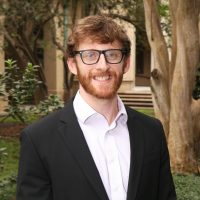
Alex Berian

Alex Berian

Founder · Principal Investigator PhD researcher · Electrical & Computer Engineering

Alex is an end-to-end researcher across AI, deep learning, generative AI, machine learning, signal processing, computer vision, and 3D vision. His doctoral work sits at the intersection of learning-based methods and classical signal/image processing, with a focus on the kinds of low-SNR, sensor-constrained problems that show up in real defense settings.

Brings the academic rigor of a publishing PhD with the systems instinct of someone who has shipped end-to-end pipelines.

AI Deep Learning Generative AI Machine Learning Signal Processing Computer Vision 3D Vision
Google Scholar ↗
JhihYang Wu

JhihYang Wu

Co-Founder · Research Engineer MS · Electrical & Computer Engineering
Former xAI

JhihYang worked as a full-time engineer at xAI while completing his master’s thesis in 3D computer vision, AI, and generative modeling. That frontier-lab experience — building and shipping at scale — is what he now brings to bear on smaller, sharper, defense-research-scale prototypes.

3D vision and generative-AI specialist with frontier-lab industry experience.

3D Computer Vision AI Machine Learning Deep Learning Generative AI
Google Scholar ↗
Daniel Brignac

Daniel Brignac

Co-Founder · Research Engineer PhD researcher · Electrical & Computer Engineering

Daniel is a PhD researcher working on machine learning, signal processing, and computer vision for sensing applications. His internship experience spans both sides of the defense-research ecosystem: the U.S. Air Force Research Laboratory (AFRL) and, currently, Areté — a direct line into the program offices and primes that drive the field.

Defense-research insider with active AFRL and Areté industry experience.

Machine Learning Deep Learning Signal Processing Computer Vision AFRL Areté
Google Scholar ↗

05 / Entity

Company facts.

For procurement, partner registration, and capability-statement requests.

Legal nameSigVis Solutions LLC
Founded2026
HQTucson, Arizona — USA
StructureLimited Liability Company
SAM.gov● Registered
Engagement

Talk to the principals.

No intake forms, no gatekeepers. Email lands directly with the people doing the work.

Response● Within 48 hours
Best forScoping notes, capability questions, NDA requests